Grow / Source record
YouTube's own history page fixes a February 2005 start
YouTube's own archived press page dates the company's founding to February 2005, years before any vertical short-form rival existed.
The working library
Platform changes, research, tools and policy: a reading trail back to the original sources. Use the new guides for applied methods, and recheck living rules before acting.
Grow / Source record
YouTube's own archived press page dates the company's founding to February 2005, years before any vertical short-form rival existed.
Grow / Source record
Instagram's June 2013 announcement fixed video at fifteen seconds with thirteen filters, its own account of entering short video.
Grow / Source record
Twitter's Vine blog documents an October 2016 shutdown notice that kept the website live while retiring only the mobile app.
Grow / Source record
Archived captures of musical.ly's own site show the lip-sync app already live months before the date most often cited for its debut.
Grow / Source record
Dubsmash's own press archive and a Reddit SEC filing trace the German lip-sync app's path from a 2015 breakout to a Reddit-owned subsidiary.
Grow / Source record
Snapchat's own 2013 blog post documents Stories as a 24-hour disappearing sequence, years before Instagram or Facebook copied the format.
Grow / Source record
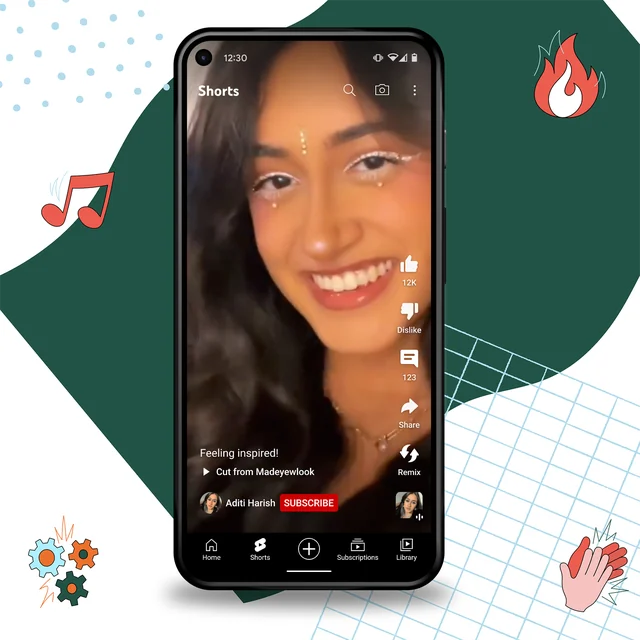
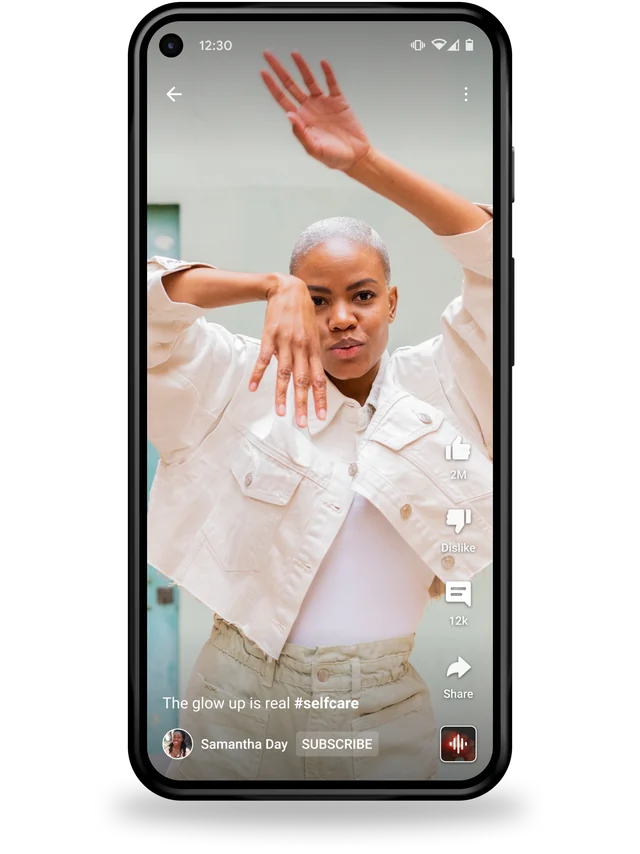
YouTube's own blog documents a September 2020 India-only beta of Shorts, launched weeks after India blocked TikTok, with only a handful of tools.
Grow / Source record
Meta's own August 2020 announcement documents a Reels launch built around new tools, not a claim that it had already beaten a rival.
Grow / Source record
India's own government notice documents a June 2020 order blocking TikTok and 58 other apps on security grounds, not a market decision.
Grow / Source record
Snap's own November 2020 announcement documents Spotlight's launch with a flat daily payout pool, a structure since replaced entirely.
Grow / Source record
TikTok's 2020 newsroom post and its current transparency page both describe For You signals without naming follower count as a factor.
Grow / Source record
YouTube's help documentation sets 15 October 2024 as when longer vertical uploads began counting as Shorts.
Grow / Source record
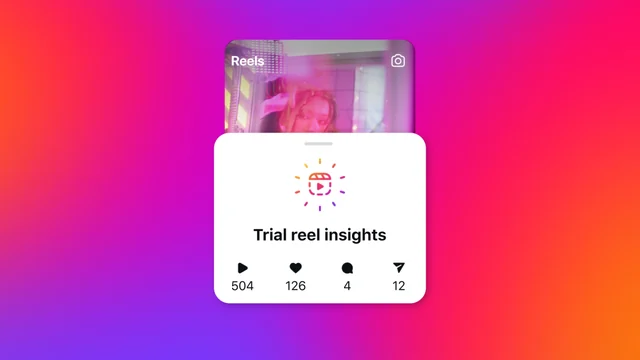
Meta's Trial Reels shows a Reel to non-followers first, and creators choose whether to widen distribution from there.
Grow / Source record
Meta's 2020 guidelines say some content stays up but stops being pushed to people who don't follow the account.
Grow / Source record
TikTok's Creative Center help article describes what the tool covers but not how current its trend rankings are.
Grow / Source record
Snap's help center sets follower, view-time, age and country thresholds before any Spotlight payout applies.
Grow / Source record
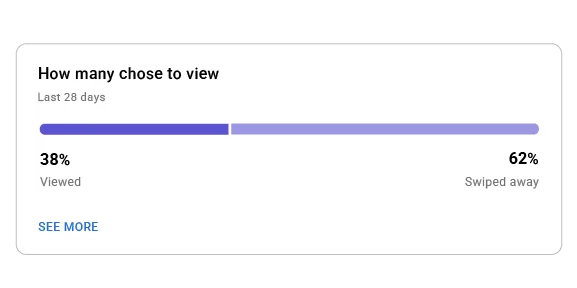
YouTube's own help pages define shown-in-feed and chose-to-view to separate reach from audience choice.
Grow / Source record
A 2021 Chinese provision, effective March 2022, required certain algorithm operators to register and disclose basics.
Grow / Source record
LinkedIn's help pages tie video distribution to quality signals and member feedback, separate from its ad specs.
Grow / Source record
TikTok's Ads Manager help page fixes dimensions, formats and limits for in-feed ads that its organic-post guidance never has to state.
Grow / Source record
YouTube's own Shorts help pages document a blocking rule for claimed content over a minute, and a stated end date for it.
Grow / Source record
Meta's help page reserves its main licensed music library for personal use and routes businesses to a separate royalty-free collection.
Grow / Source record
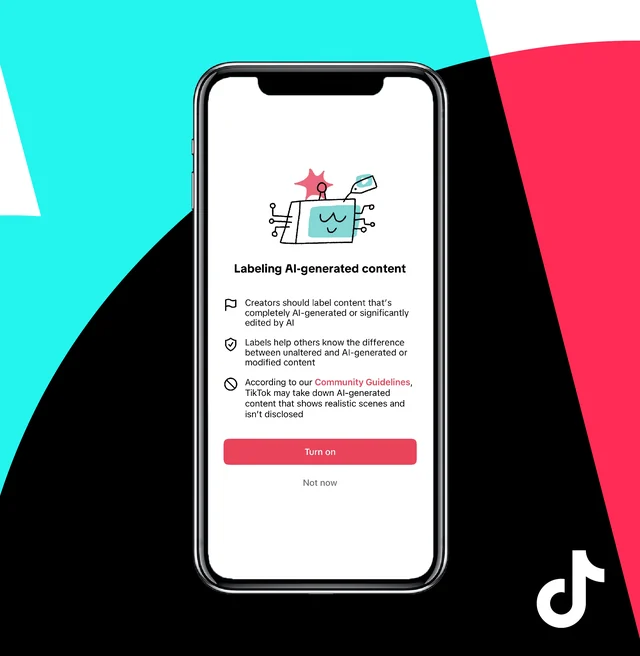
TikTok's guidelines require an AIGC label for realistic synthetic media and set different disclosure rules for public and private figures.
Grow / Source record
YouTube's March 2024 disclosure rule for realistic synthetic content got a more visible label placement in a May 2026 update.
Make / Source record
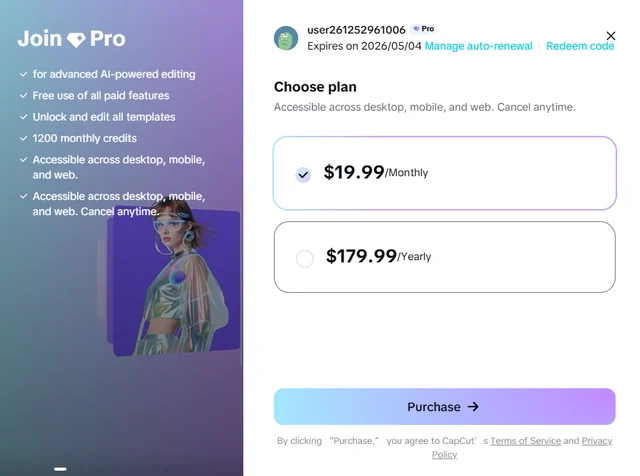
CapCut's own help page declines to state a fixed Pro price while its terms claim a broad, royalty-free license over uploaded content.
Make / Source record
ElevenLabs and HeyGen both meter access through monthly credit pools rather than flat per-video fees, their own pricing pages show.
Make / Source record
Blackmagic still sells DaVinci Resolve Studio as a one-time purchase, while Apple's Final Cut Pro now also offers a monthly plan.
Make / Source record
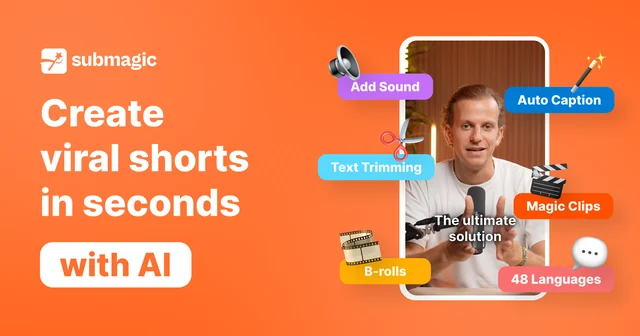
Submagic and Captions AI both gate longer video duration behind higher tiers, their own pricing pages show, not only feature count.
Make / Source record
Runway's own documents grant creators unrestricted commercial use of generated video while reserving a license to reuse it for model training.
Make / Source record
Canva's own dated license text draws three different permission lines for stock, templates and branded content.
Make / Source record
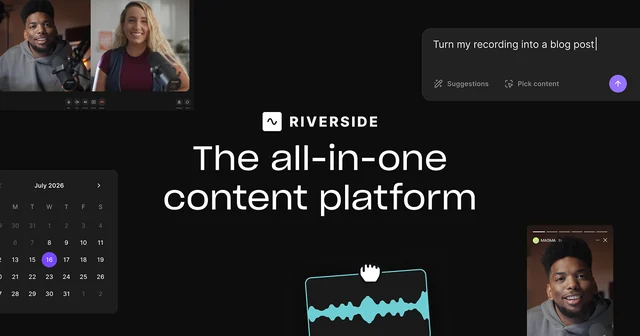
Riverside's own pricing page keeps recording hours unlimited on every tier and charges instead for resolution and downloads.
Make / Source record
Buffer charges per connected channel while Metricool charges per plan tier covering a bundle of brands.
Make / Source record
vidIQ's own plans page lists research features and tier pricing that remain vendor estimates rather than platform-disclosed figures.
Make / Source record
Lemon8's own terms rule out a default revenue share while a linked supplemental document allows content to cross-post with TikTok.
Make / Source record
Pinterest and YouTube each document their own tolerance for vertical video, and 9:16 sits inside both without either calling it a standard.
Make / Source record
TikTok's own help pages require business use to route through a pre-cleared library rather than the general personal sound tab.
Make / Source record
The Copyright Office's own report finds prompts insufficient for authorship but allows edited AI output to qualify case by case.
Make / Source record
Meta's own newsroom post ties its Made with AI label to detected signals or self-disclosure, and has already been revised twice.
Make / Source record
Adobe's 2024 preview of its Firefly Video Model made training-safety claims but did not state when the beta would end.
Grow / Source record
TikTok's case study on Duolingo reports follower and reach gains as vendor-stated results, not an audited measurement.
Grow / Source record
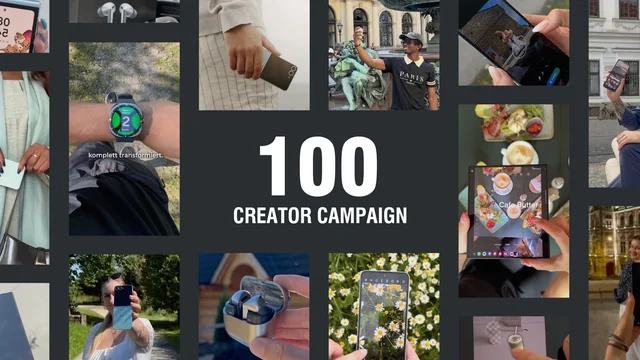
TikTok's Samsung Germany case study ties tiered creator counts to engagement bands TikTok itself calculated.
Grow / Source record
TikTok's Gym King case study credits an in-app gallery and bid strategy for gains it alone measured.
Grow / Source record
TikTok's case study on The Raw ties conversion gains to ad sequencing, in TikTok's own reported figures.
Grow / Source record
YouTube's own update says most Shorts-threshold joiners also earn from other Partner Program features.
Grow / Source record
TikTok's 2020 rollout of Stitch extended Duet's collaboration mechanic with its own attribution rules.
Grow / Source record
TikTok's own documentation and a 2022 in-app promotion define what Add Yours does and does not guarantee.
Grow / Source record
YouTube's Shorts remix tool caps reused footage at five seconds and credits the source automatically.
Grow / Source record
Reuters Institute's 2025 report cites a single YouTube and TikTok creator's under-35 reach as one data point.
Earn / Source record
TikTok's own 2020 announcement set eligibility and a starting fund size, later revised, without stating what any individual creator would earn.
Earn / Source record
TikTok's own 2023 announcement raised the bar to original videos over a minute, replacing the Creator Fund it had run since 2020.
Earn / Source record
TikTok's 2024 announcement sets a one-minute video floor and a four-part formula, distinct from other platforms' ad-share rates.
Earn / Source record
YouTube's own 2021 post frames a $100 million pool as a temporary step before an ads-based Shorts payout model.
Earn / Source record
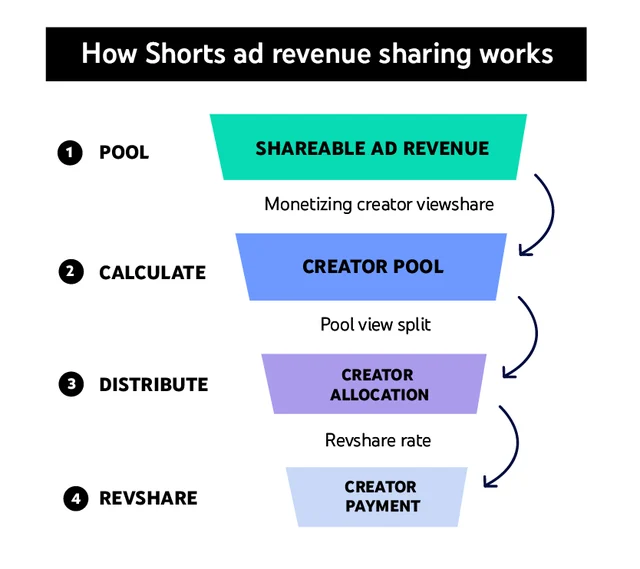
YouTube's own documentation defines a pooled Creator Pool and a 45% share, a different design from a fixed fund.
Earn / Source record
Meta's own creator-blog case study and current Bonuses page describe an invite-only model, not a published rate.
Earn / Source record
Meta's 2024 newsroom post merges in-stream ads, Reels ads and bonuses into one invite-only beta program.
Earn / Source record
Meta's March 2026 post rewards original Facebook creators and demonetizes accounts posting mostly unoriginal content.
Earn / Source record
Snap's help documentation combines Spotlight and Stories ad payouts into a single eligibility ladder.
Earn / Source record
IAB's November 2025 report puts US creator ad spend at $37 billion, a survey-based industry estimate, not a measured transaction total.
Earn / Source record
The bank's 2023 research note projects the creator economy could reach $480 billion by 2027, a modelled estimate, not a market census.
Earn / Source record
Patreon's 2025 State of Create report surveys 1,007 creators and 2,002 fans about income and platform trust, not payout ledgers.
Earn / Source record
YouTube's August 2026 post sets a 10 million-view Shorts threshold and new entry requirements effective February 2027.
Earn / Source record
A 2025 preprint using 104,719 Patreon accounts finds an earnings tail closer to capital income than to a typical wage.
Measure / Source record
Pew's social media tracker reflects a survey of 5,022 US adults fielded through June 2025, not a real-time count.
Measure / Source record
Reuters Institute's 2025 survey of 48 markets finds 54% of US respondents used social and video networks for news, ahead of sites and apps.
Measure / Source record
DataReportal's Digital 2025 report blends ten vendors' data, and its own text shows platform ad-reach figures can diverge from usage estimates.
Measure / Source record
A 2024 preprint tracking 250 YouTube creators found a long-form view decline that was statistically significant only for the largest channels.
Measure / Source record
A 2024 preprint by Kuaishou researchers reports a 10.2% CTR gain from personalized search, an internal A/B result, not outside verification.
Measure / Source record
YouTube's press page states a Shorts daily-views figure with no timestamp, while its help center just redefined what a view counts as.
Measure / Source record
TikTok's latest enforcement report nearly tripled its market coverage, so a rising removal count is not the same as rising violations.
Measure / Source record
Meta's Transparency Center defines two separate enforcement metrics, and neither is broken out for video or Reels alone.
Measure / Source record
Ofcom's 2025 Online Nation report attributes UK app reach and time-spent data to Ipsos iris's roughly 10,700-person panel.
Measure / Source record
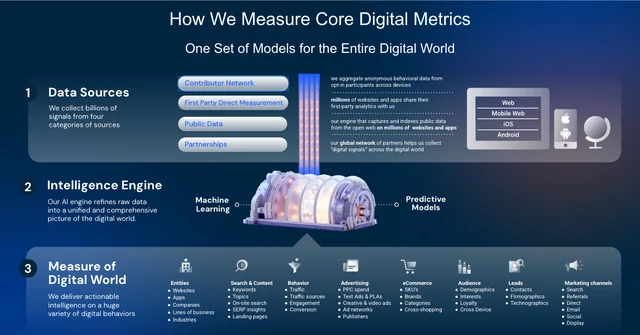
Similarweb's own documentation describes a modelled, blended estimate of app engagement, not a single measured panel.
Measure / Source record
The 2021 Common Sense census fielded a probability panel of 1,306 U.S. 8- to 18-year-olds and classifies TikTok as online video.
Measure / Source record
eMarketer's 2023 forecast defines two different 'time spent' metrics per platform and labels both as modelled, not platform-disclosed.
Measure / Source record
Ofcom's Children and Parents report splits UK kids into four age bands, and the youngest band is answered by a parent, not the child.
Measure / Source record
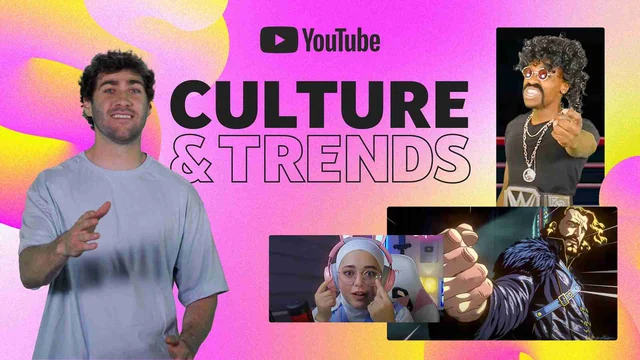
YouTube's Culture and Trends reports pair internal viewing-trend analysis with a commissioned multi-country survey, kept visibly separate.
Measure / Source record
TikTok's 2024 DSA risk assessment names its own recommender system as a top risk factor and scores it with a method TikTok designed.
Earn / Source record
The European Commission opened formal TikTok proceedings under the DSA to examine four risk areas, a step short of any finding of breach.
Earn / Source record
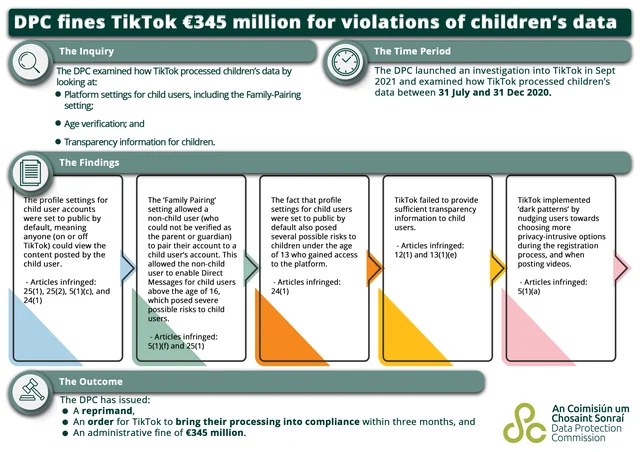
Ireland's Data Protection Commission's own decision states which GDPR articles TikTok's 2020 defaults and Family Pairing feature breached.
Earn / Source record
The ICO's own announcement states why its provisional £27 million notice against TikTok became a £12.7 million final fine.
Earn / Source record
The DOJ and FTC's own filings allege TikTok violated COPPA and a prior consent order; a court has not yet ruled on the claims.
Earn / Source record
The FTC's own 2019 release states Musical.ly agreed to pay $5.7 million and change practices, without admitting the alleged violations.
Earn / Source record
The FTC's final rule adds a parental opt-in for ad-data sharing, with effective and compliance dates set out in the Federal Register.
Earn / Source record
The enacted Act sets a minimum age of 16 without naming platforms, leaving the definition and its start date to ministerial rules.
Earn / Source record
New York's SAFE for Kids Act restricts addictive feeds for minors, but its own text ties the effective date to Attorney General rulemaking.
Earn / Source record
SB 976's own text lets platforms rely on actual knowledge of a user's age until 2027, when active age determination becomes mandatory.
Earn / Source record
The FTC's own materials define what counts as a paid relationship and state which disclosure placements they consider inadequate.
Earn / Source record
Utah's enrolled bill shifts age verification duty to app stores starting May 2026.
Earn / Source record
The EU's DSA text specifies what a very large platform's public ad repository must contain.
Earn / Source record
The FTC's own pages set how a COPPA safe harbor program is approved and what it must do.
Earn / Source record
Regulation 2024/900's own text sets what a political ad label and notice must disclose from October 2025.
Grow / Source record
Meta confirmed it would stop supporting IGTV's app and fold long-form video into Instagram.
Grow / Source record
YouTube's own post confirms the March 2021 beta expansion beyond India, ahead of monetisation.
Grow / Source record
TikTok's 2021 newsroom post claims 1 billion monthly users without defining the metric used.
Grow / Source record
The August 2020 CFIUS order set a divestiture deadline; courts later blocked a related ban.
Grow / Source record
Reporting shows Reels moved from testing to a 50-country launch in stages through mid-2020.
Grow / Source record
Pinterest's business help center sets numeric video-ad specs but publishes no organic Pin specs on the same page.
Grow / Source record
TikTok's Effect House ties a filter's reach across millions of videos to a visible creator credit.
Earn / Source record
X's help documentation ties Original Content Rewards to qualified Premium impressions, replacing its older ad-share model.
Grow / Source record
Meta's own confirmation shows Reels reaching Facebook worldwide five months after its US debut.
Try a broader term, choose another topic or start fresh.