Independent short-form field notesLocal review edition · 19 September 2026
Short-Form Research

A field guide to attention

What made
you stop scrolling?

A falling clip. An unexpected cut. A second video that never stops moving. Learn to name the format, follow the evidence and keep the promise after the hook.

Identify the format ↓
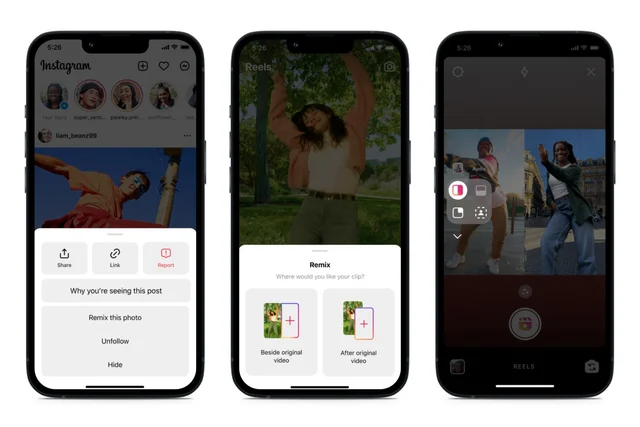
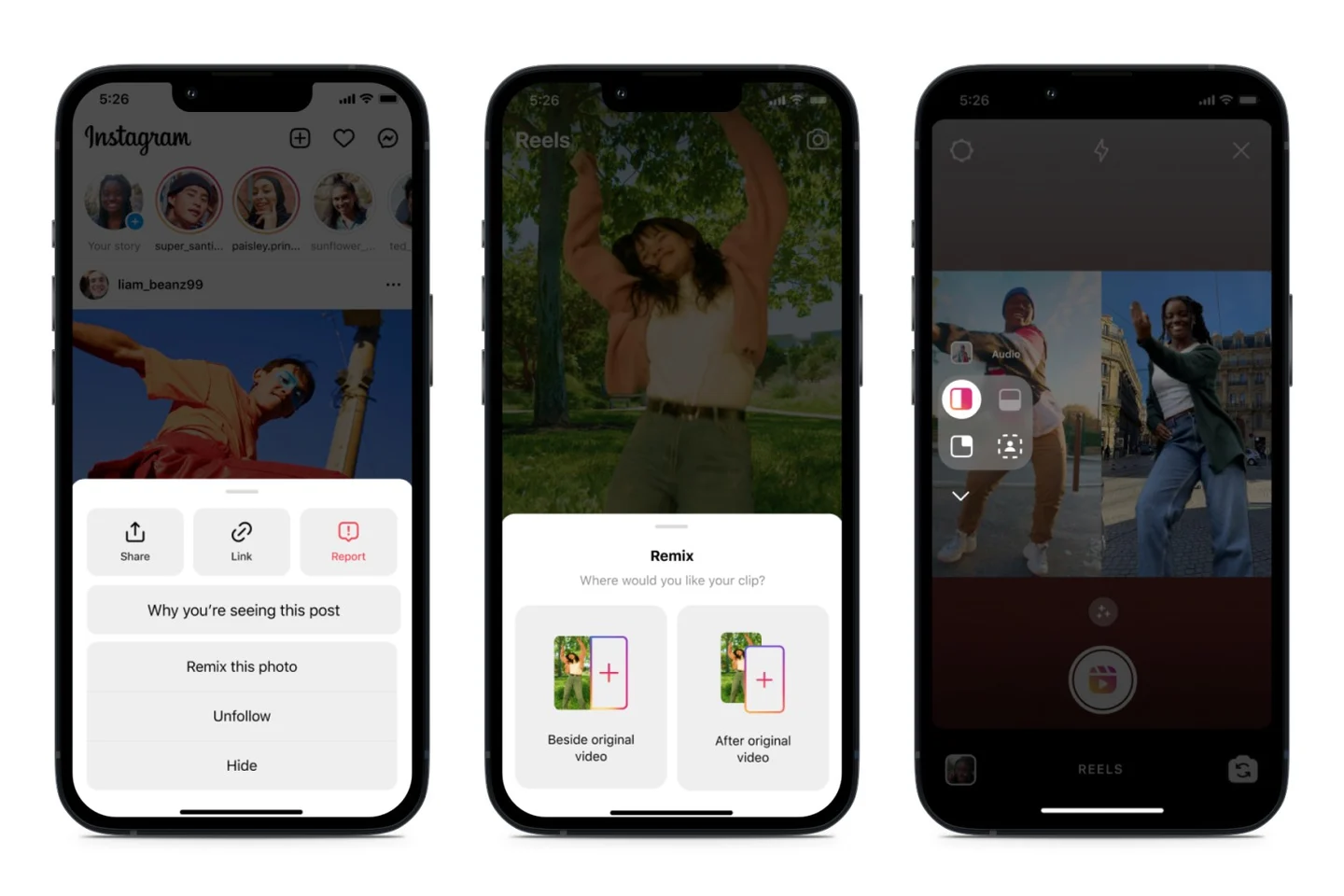
Meta’s 2022 Instagram Remix panel showing a photo-remix menu, beside/after-original choices and split-screen controls. Historical interface reference, not this site’s footage.
Meta’s 2022 Instagram Remix panel showing a photo-remix menu, beside/after-original choices and split-screen controls. Historical interface reference, not this site’s footage. Credit: Meta · Original source ↗REFERENCE ONLY — NOT CLEARED FOR PRODUCTION · owner review pending

A real interface reference, not a performance claim.

01 / Look at the structure

Same screen. Different job.

These are working editorial labels, not official Instagram categories. Change the format to compare the relationship between the clips.

All six formats are shown below.

01 / One clip, then another
Beat 1Object falls
Beat 2Motion continues
Beat 3Useful answer

Original schematic · illustrative, not footage or results

Transitional / drop hook

A striking opening hands over to the main scene through connected movement. A drop or fall is one possible motion, not a separate official platform feature.

Ask this
Does the next scene resolve what the opening made you expect?
Keep in mind
A matched movement can still hide an unrelated message.
Read the practical guide ↗
02 / Two streams at the same time
Panel 1Main narration
Panel 2Unrelated motion

Original schematic · illustrative, not footage or results

Unrelated split screen / sludge

The main narration shares the frame with unrelated gameplay or another continuing activity. There is no single handoff at which the extra visual disappears.

Ask this
Can the viewer explain the main point without describing only the extra panel?
Keep in mind
Viewing time does not tell you which panel held attention or whether the message was understood.
Read the practical guide ↗
03 / Two related streams
Panel 1Action being discussed
Panel 2Explanation of that action

Original schematic · illustrative, not footage or results

Relevant reaction / demonstration

The second panel comments on or explains what the first panel shows. Relevance comes from the relationship between the clips, not from the layout itself.

Ask this
Does the commentary point to something the viewer can actually see?
Keep in mind
A native remix tool is not a blanket permission for every off-platform use.
Read the practical guide ↗
04 / A question, then its answer
Beat 1Why is this stuck?
Beat 2Show the cause
Beat 3Resolve the question

Original schematic · illustrative, not footage or results

Open loop

An unfinished action or unanswered question sets up a later resolution. It can use entirely original footage and does not need a borrowed clip.

Ask this
Is there a clear answer, and is waiting for it worthwhile?
Keep in mind
Repeated delays can make the opening promise feel empty.
Read the practical guide ↗
05 / An expectation is abandoned
Beat 1An event begins
Beat 2Unrelated pitch
Beat 3Expected answer missing

Original schematic · illustrative, not footage or results

Bait-and-switch

The opening implies one subject or payoff, then changes to a message that does not answer it. Here the label describes an editorial mismatch, not a legal finding.

Ask this
Would someone who stopped for the opening feel fairly oriented by the next scene?
Keep in mind
A good-looking cut cannot repair a broken promise.
Read the practical guide ↗
06 / Stay on the same subject
Beat 1Relevant problem
Beat 2Visible proof
Beat 3Next useful step

Original schematic · illustrative, not footage or results

Direct problem-and-proof hook

Name the viewer’s problem and begin the demonstration. This is a useful comparison edit when you want to know whether an elaborate opener adds anything.

Ask this
Can the viewer tell immediately what this helps them do?
Keep in mind
A relevant opening still needs a readable demonstration and a supportable claim.
Read the practical guide ↗

02 / Go beyond the label

Five guides. One useful question.

Does the attention reach the message? Start with the terminology, then make, assess, test and clear the edit.
Beat 1Object falls
Beat 2Motion continues
Beat 3Useful answer

Original storyboard · hypothetical sequence

Make / Field guide

Make the cut earn its keep: a transitional hook with a real payoff

Plan an opening, a visual handoff and a useful answer as one sequence. A smooth transition is not enough if the message changes underneath it.

4 min read · Research checked 19 Sep 2026
Panel 1Main narration
Panel 2Unrelated motion

Original layout schematic · not a real Reel

Measure / Field guide

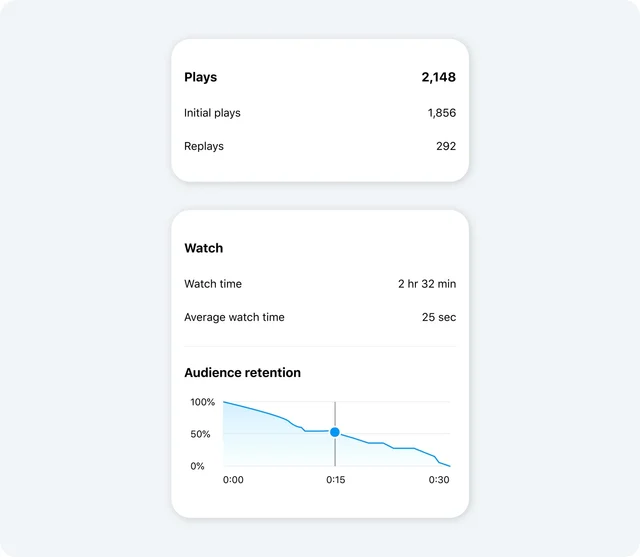
Sludge Content: What the Attention Evidence Actually Measures

Separate simultaneous unrelated panels from useful supporting visuals, then read the small direct studies without turning short-term task results into claims about brains or Instagram reach.

3 min read · Research checked 19 Sep 2026
Three separate decisions
Find the sourceCheck the useClear or replace
Credit is provenance, not permission.

Earn / Field guide

Before you borrow the hook: a footage and permission checklist

A downloadable clip, a creator credit and a seamless match cut answer different questions. Keep the rights decision separate from the editing decision.

4 min read · Research checked 19 Sep 2026
03 / Keep the comparisons honest

A hook is a hypothesis.

A source’s format name is not proof of effectiveness. A lab attention task is not Reel retention. A real screenshot is not a promise that every account has the same controls.

Our diagrams explain structure without imitating a real creator’s work. The linked guides carry the sources, dates and limitations. No clinical, ranking or guaranteed-growth claim is made here.

How we evaluate evidence ↗
  1. Run a Four-Week Hook Experiment Without Fooling YourselfCompare opening approaches over a month without presenting noisy feed results as causal proof.
  2. Compare Short-Form Posts Without Fooling YourselfCompare post performance fairly when formats, distribution windows, audiences, and platform definitions differ.
  3. Make Captions Carry Meaning, Then Run Human QAPublish readable captions that accurately convey speech and relevant audio without covering the evidence.